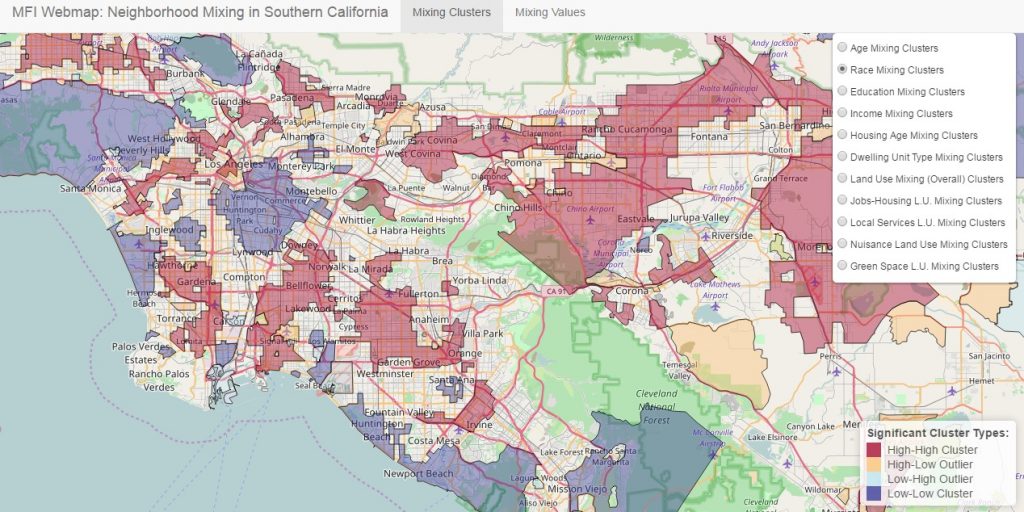
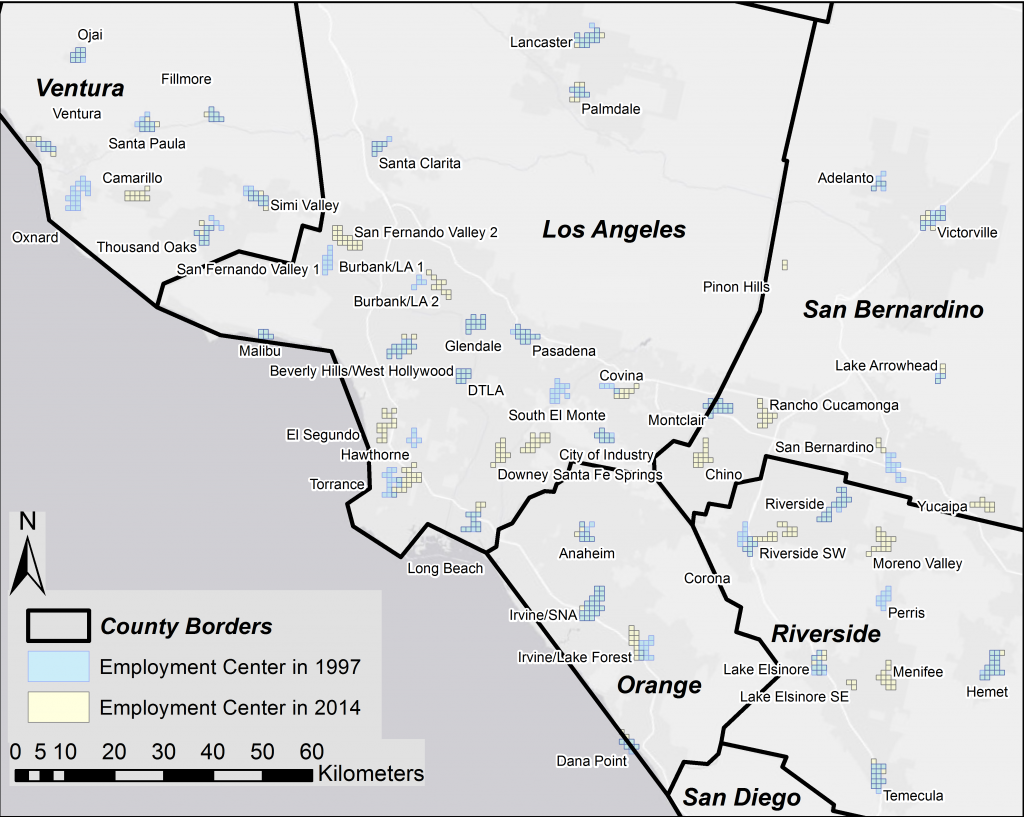
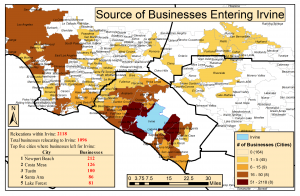
 Business recruitment has long been one of the most popular strategies for state and local economic development in the US, but little is understood about the precise physical location of business moves, such as the surrounding neighborhoods and how far away a firm relocates. This Report takes a spatially precise approach toward analyzing business relocations in the seven-county Southern California region from 1997-2014. We analyze moves within cities and across city boundaries, as well as the characteristics of the neighborhoods which businesses leave – and move to.
Download the full report here (.pdf). Register for the webinar covering this report on 8/15/2017 here.
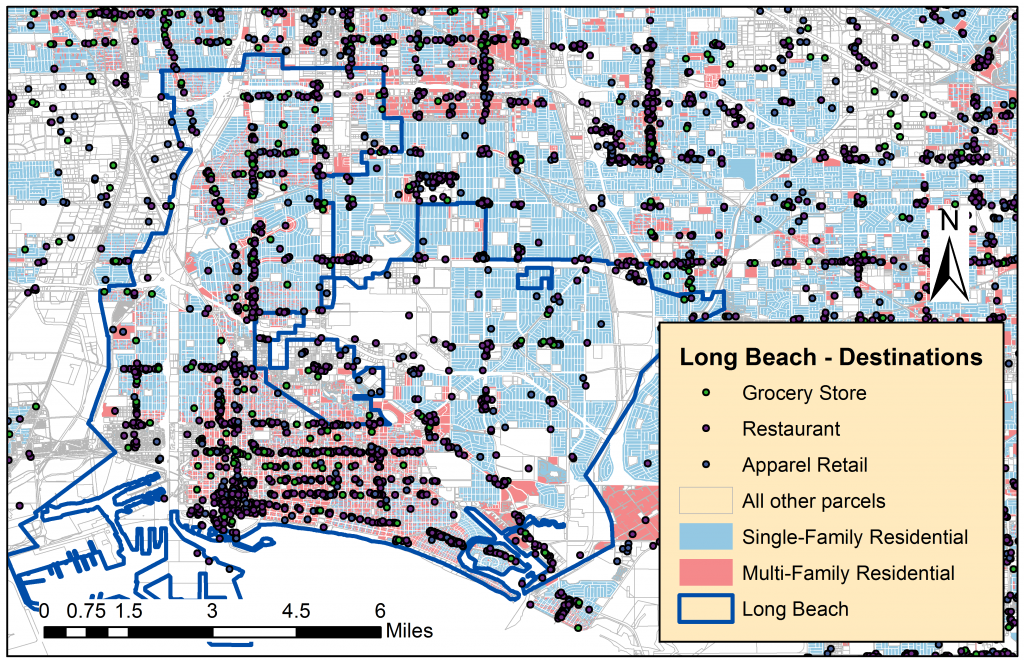
 This research explores the notion of urban accessibility, defined as the spatial separation between dwelling units and 32 types of destinations including shopping, open space, and public services. Using data on the roughly five million residential land parcels in Southern California, we use network analyses and multilevel regression modeling to determine what it is about homes that make them more or less accessible to a wide variety of destination types. In most places across the region, older homes, smaller homes, and multifamily residences have a positive relationship to accessibility; however this varies widely across counties and cities.